English
한국어
English
Español
中文
हिंदी
Home
News
Community
Dictionary
English
한국어
English
Español
中文
हिंदी
View list
Catalpa
Catalpa bignonioides
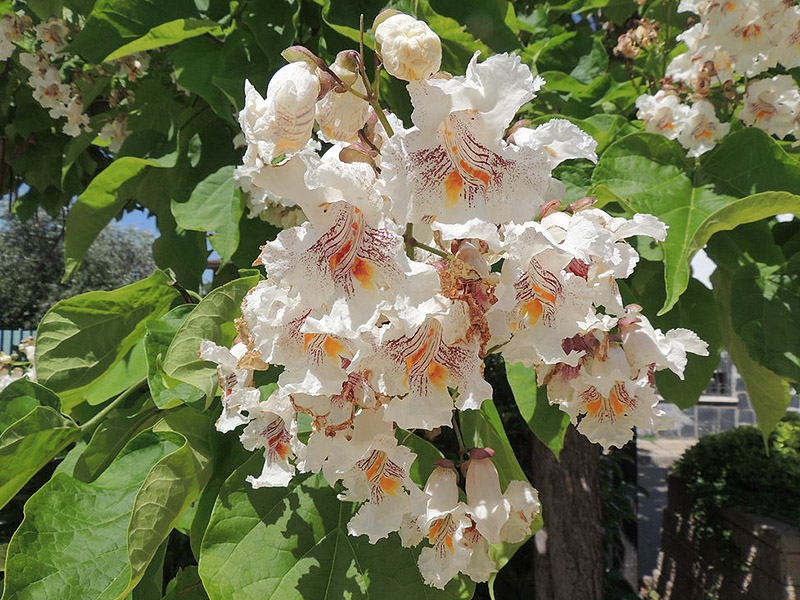
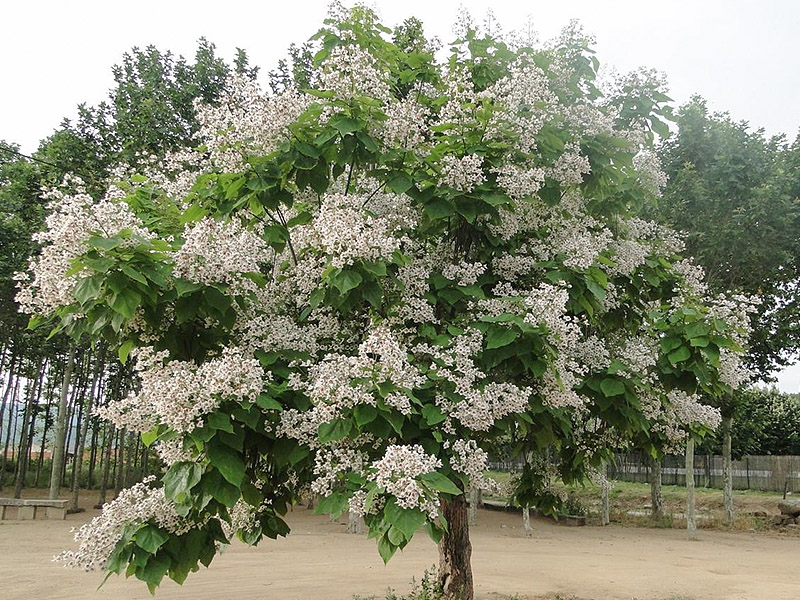
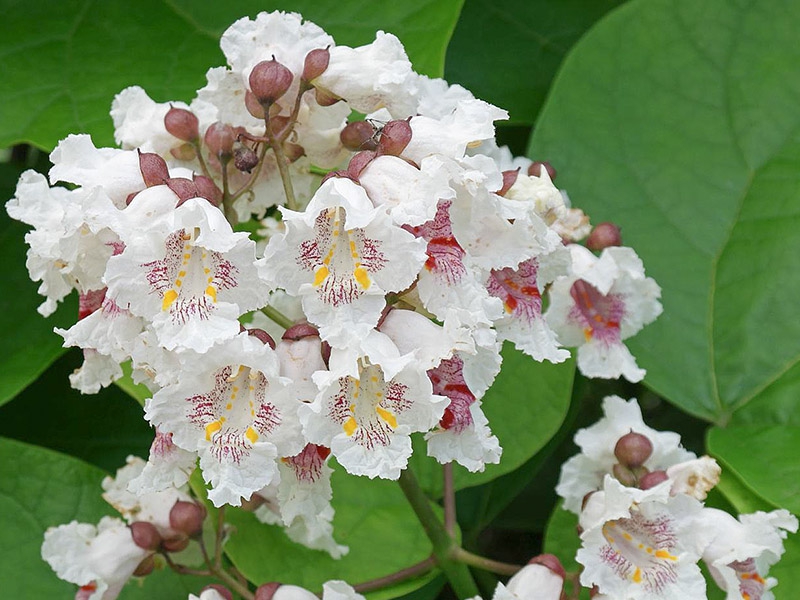
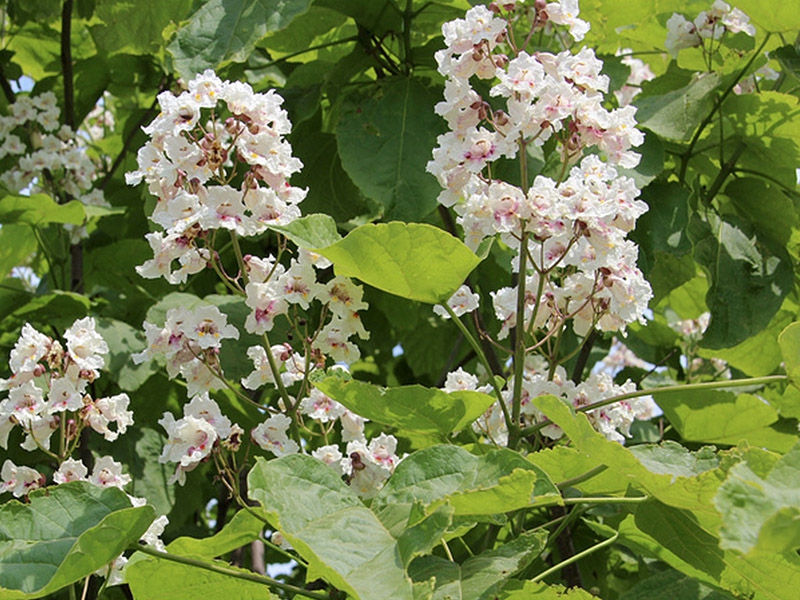
Catalpa bignonioides primarily possesses the following characteristics: Growth Characteristics - Size: Mature trees can grow up to 12–15 meters in height, with a broad, rounded crown. - Leaves: It has large, heart-shaped leaves, typically measuring 15–30 centimeters in length. - Flowers: White, bell-shaped flowers bloom in the summer, featuring purple spots and yellow stripes. - Fruit: Long, narrow, pod-shaped fruits develop in the autumn. Propagation Methods - Seeds: Natural propagation is primarily achieved through seeds; seeds are collected from mature fruits and sown immediately. - Cuttings: Cuttings taken in the summer are also a viable method. Cultivation Methods - Soil: It prefers well-drained soil and adapts well to soils ranging from acidic to slightly alkaline. - Sunlight: While it prefers sunny locations, it can also grow in partial shade. - Watering: It requires sufficient watering during the early growth stage, but it is relatively drought-tolerant once it matures. Uses in Gardens- It is primarily planted along the boundaries of gardens or parks to provide shade, and is widely used as an ornamental plant due to its beautiful flowers and large leaves. Important Pests and Control Methods- Diseases: Fungal diseases such as powdery mildew or leaf spot may occur. To prevent this, ensure good air circulation and use appropriate fungicides if necessary. - Pests: Pests such as the Catalpa sphinx moth can cause problems. Upon early detection, remove pests by hand or use insecticides if necessary. If you understand these characteristics well and manage the plant properly, the Catalpa can grow into a very useful and beautiful tree for your garden.
Plant Family
Bignoniaceae
Height
10~30m
Colors
white
Bloom Period
June
Water Needs
commonly
Exposure
Sunny
Freezing Resistance
-15°C
Paulownia
Catalpa ovata
American catalpa
Catalpa speciosa