English
한국어
English
Español
中文
हिंदी
Home
News
Community
Dictionary
English
한국어
English
Español
中文
हिंदी
View list
Night-blooming jasmine
Cestrum nocturnum
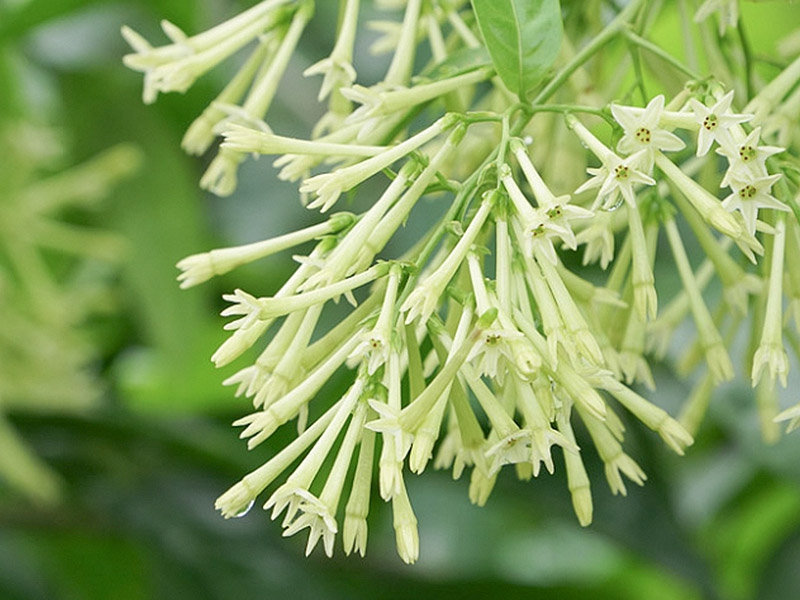
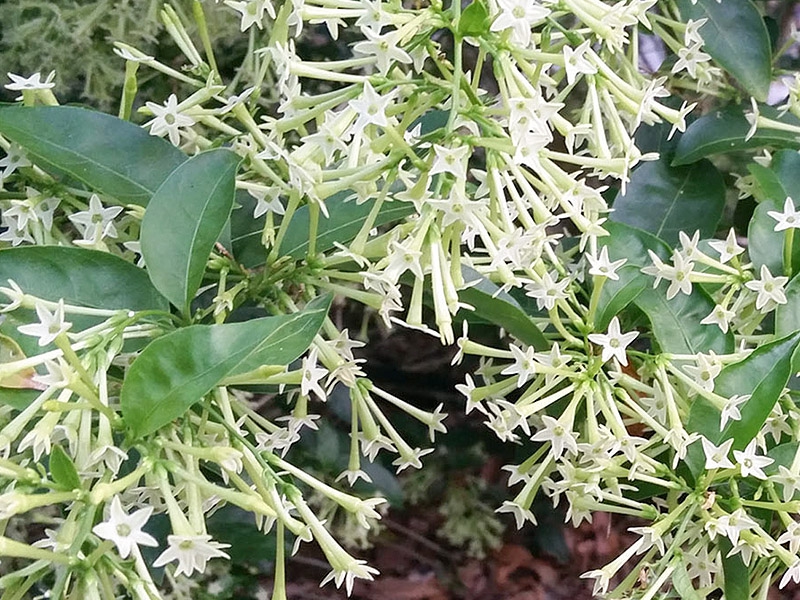
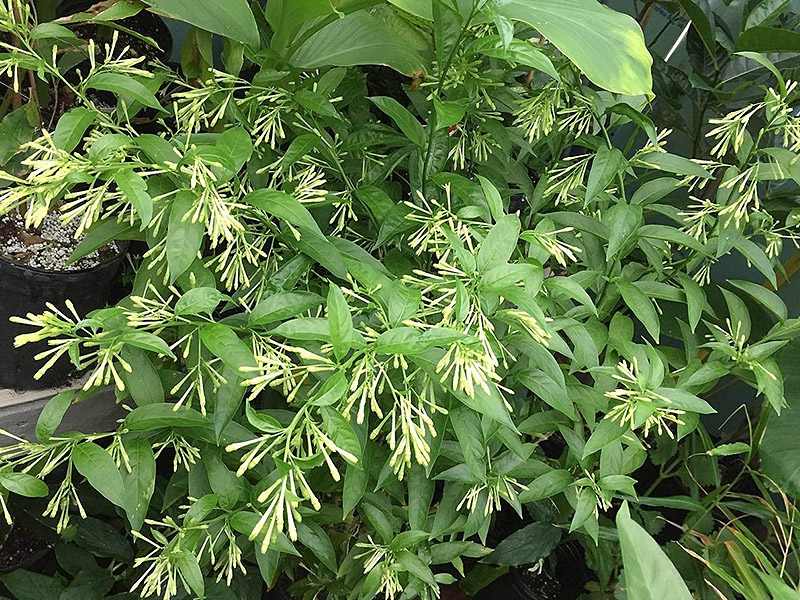
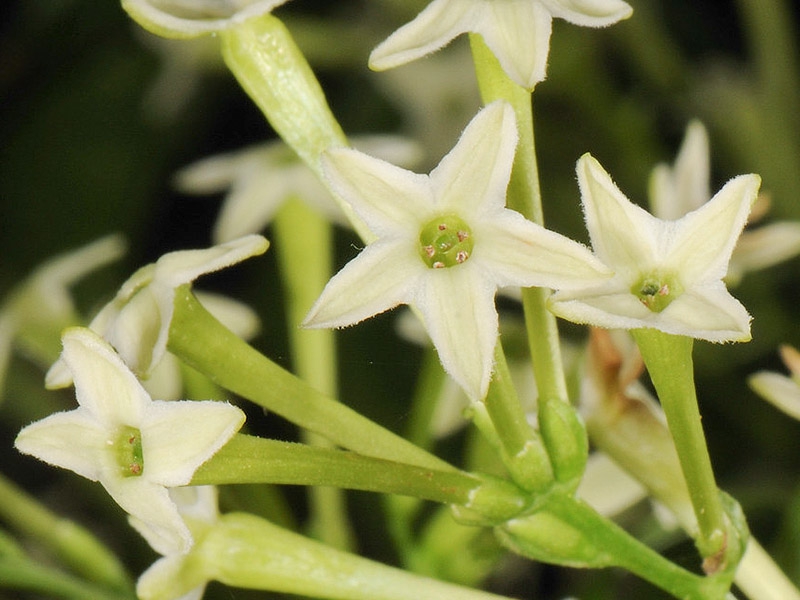
Cestrum nocturnum, also known as the night-blooming jasmine, is a plant that grows primarily in tropical and subtropical regions and is famous for its distinctive fragrance. Growth Characteristics Night-blooming jasmine thrives in warm and humid environments. It requires high temperatures and adequate sunlight; growth may be inhibited if temperatures are too low. The plant blooms in the evening, emitting a strong fragrance that is particularly intense at night. Propagation Methods Propagation is primarily achieved through cuttings or seeds. For cuttings, a healthy branch is cut and planted in water or soil to encourage rooting. For propagation by seeds, seeds are collected from ripe fruit and sown. Cultivation Methods - Location: It is best to grow it in a sunny location. However, it prefers partial shade rather than strong direct sunlight. - Soil: It prefers fertile, well-drained soil. Slightly acidic to neutral soil is suitable. 3. Watering: Water frequently to maintain adequate humidity. However, care must be taken, as poor drainage can cause root rot. - Fertilization: During the growing season, applying slow-release fertilizer can promote growth. Uses in the Garden Due to its fragrance, Night-blooming Jasmine is suitable for planting along garden borders or around terraces to create a fragrant atmosphere. It can create a particularly attractive garden at night when the flowers are in bloom. Important Pests and Control Methods - Diseases: It may be susceptible to fungal diseases such as root rot. This is mainly caused by excessive moisture and can be prevented through proper drainage management and ventilation. - Pests: Moths and aphids may occur; these can be controlled using appropriate pesticides. They can also be effectively controlled using eco-friendly pesticides or soapy water. Night-blooming Jasmine is a plant that is relatively easy to care for but thrives only when provided with the right environment. Its fragrant scent can add special charm to gardens or indoor spaces.
Plant Family
Solanaceae
Height
2.4~3m
Colors
white
Bloom Period
June to August
Water Needs
commonly
Exposure
semi-shaded area
Freezing Resistance
-5°C
Love Chain
Ceropegia linearis
subsp.
woodii
Quince sinensis
Chaenomeles sinensis