English
한국어
English
Español
中文
हिंदी
Home
News
Community
Dictionary
English
한국어
English
Español
中文
हिंदी
View list
Thistle 'Atropurpureum'
Cirsium rivulare
'Atropurpureum'
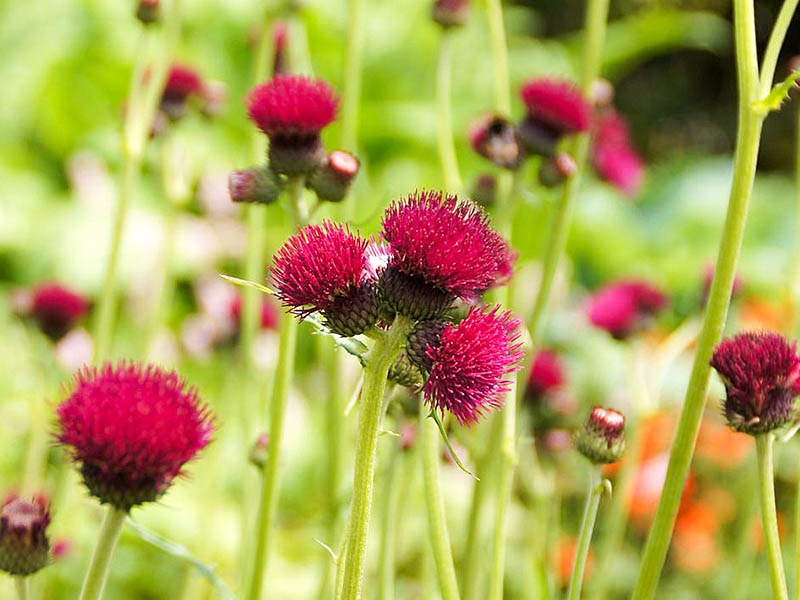
The thistle 'Atropurpureum' (Cirsium rivulare 'Atropurpureum') is a perennial herbaceous plant characterized by its distinctive reddish-purple flowers. The following describes the plant's growth characteristics, propagation methods, cultivation techniques, garden uses, and major pests and diseases, as well as control methods. Growth Characteristics - Height: Grows to approximately 1 to 1.5 meters. - Flowers: Blooms primarily between spring and summer, producing round, reddish-purple flowers. - Leaves: Has long, narrow leaves with slightly serrated margins. - Environment: Prefers sunny locations but grows well in partial shade. It thrives particularly in moist soil. Propagation Methods - Seed Propagation: It can be propagated using seeds; sowing in spring or autumn is recommended. - Division: Propagation by dividing the roots in spring or autumn is also possible. It is recommended to select young roots when dividing. Cultivation Method - Soil: Well-draining soil that retains moisture is suitable. - Watering: Water consistently to prevent the soil from drying out; providing sufficient water is especially important during the growing season. - Fertilizer: It grows well without separate fertilizer, but it is beneficial to apply additional organic fertilizer in the spring before flowering. Uses in the Garden - Landscape: Due to its tall stature and unique flower colors, it is excellent as a focal point in the garden. - Background Planting: It is advantageous to plant it in the background of other plants to create overall harmony. - Wildflower Garden: It is a good choice for gardens that prefer a natural landscape. Major Pests and Diseases & Control Methods - Diseases: It is generally resistant to diseases, but root rot may occur if the soil is overwatered. To prevent this, care must be taken to ensure good drainage. - Pests: It is generally resistant to pests, but larvae may gnaw on the leaves. If necessary, larvae can be removed by hand or eco-friendly insecticides can be used when they appear. The thistle 'Atropurpurium' adds vitality to the garden with its unique colors and shapes, and since it is relatively easy to care for, it is suitable for use in various garden styles.
Plant Family
Asteraceae
Height
90~120cm
Spread
30~60cm
Colors
pink
Bloom Period
July~August
Water Needs
commonly
Exposure
Sunny
Freezing Resistance
-30°C
Milk thistle (Cirsium rhizome)
Cirsium altissimum
Mexican ivy
Cissus rhombifolia