English
한국어
English
Español
中文
हिंदी
Home
News
Community
Dictionary
English
한국어
English
Español
中文
हिंदी
View list
Taro 'White Lava'
Colocasia esculenta
'White Lava'
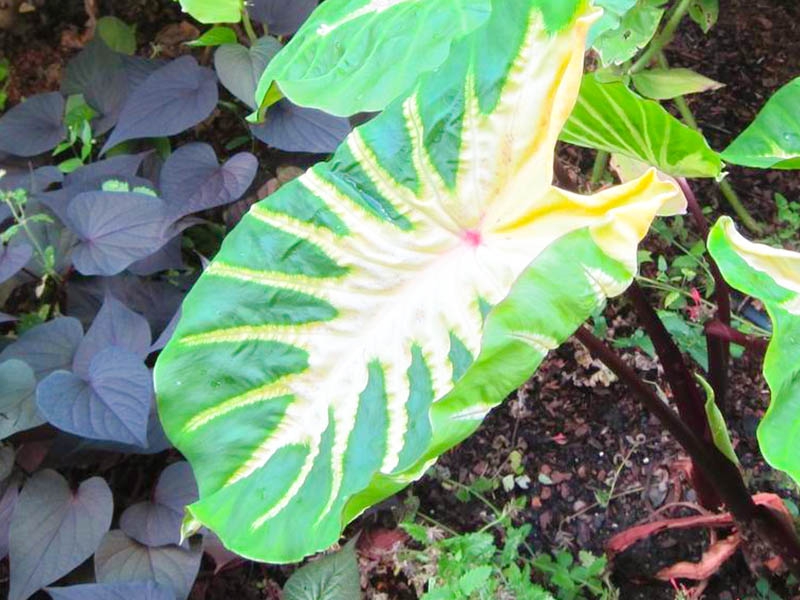
The taro 'White Lava' (Colocasia esculenta 'White Lava') is a popular plant for gardens and indoor decoration due to its unique leaf shape and vibrant colors. The following is information regarding the growth characteristics, propagation methods, cultivation methods, garden uses, and major pests and diseases, as well as control methods for 'White Lava'. Growth Characteristics - Light: It thrives in partial shade, and leaves display more vivid colors in environments requiring sufficient light. - Moisture: It likes water, but well-draining soil is essential. Care must be taken to avoid overwatering. - Temperature: It prefers warm environments and is sensitive to cold. It is recommended to keep it indoors during the winter. - Soil: Fertile and well-draining soil is ideal. Propagation Methods - Bulb Division: It can be propagated by separating bulbs in spring or early summer. - Seeds: Propagation by seed is generally not used; bulb division is more effective. Cultivation Methods - Planting: Plant the bulbs after the soil has warmed up sufficiently. The appropriate planting depth is about twice the height of the bulb. - Watering: Water thoroughly, but plant in well-draining soil to prevent overwatering. - Fertilization: During the growing season, it is recommended to apply liquid fertilizer every four weeks. - Winter Care: When temperatures drop, move the plant indoors or dig up the bulbs for storage. Uses in the Garden - Ornamental: Due to its large leaves and colorful patterns, it can be used as a focal point in gardens or outdoor pots. - Waterside Planting: Planting near water can create a natural atmosphere. Important Pests and Control Methods - Spider Mites: These mainly occur in dry indoor environments; they can be controlled by spraying water or using eco-friendly pesticides. - Soft Rot: This is caused by overwatering and can be prevented by ensuring proper drainage. - Aphids: They can be removed using soapy water or by using pesticides. Based on the information above, grow the 'White Lava' taro well and cultivate it into a beautiful plant.
Plant Family
Araceae
Height
90~120cm
Spread
60~90cm
Colors
Green, white
Bloom Period
March to August
Water Needs
commonly
Exposure
Sunny
Freezing Resistance
-5°C
Large taro 'Thailand Giant'
Colocasia gigantea
'Thailand Giant'
Taro 'Mojito'
Colocasia esculenta
'Mojito'