English
한국어
English
Español
中文
हिंदी
Home
News
Community
Dictionary
English
한국어
English
Español
中文
हिंदी
View list
Papyrus 'King Tut'
Cyperus papyrus
'King Tut'
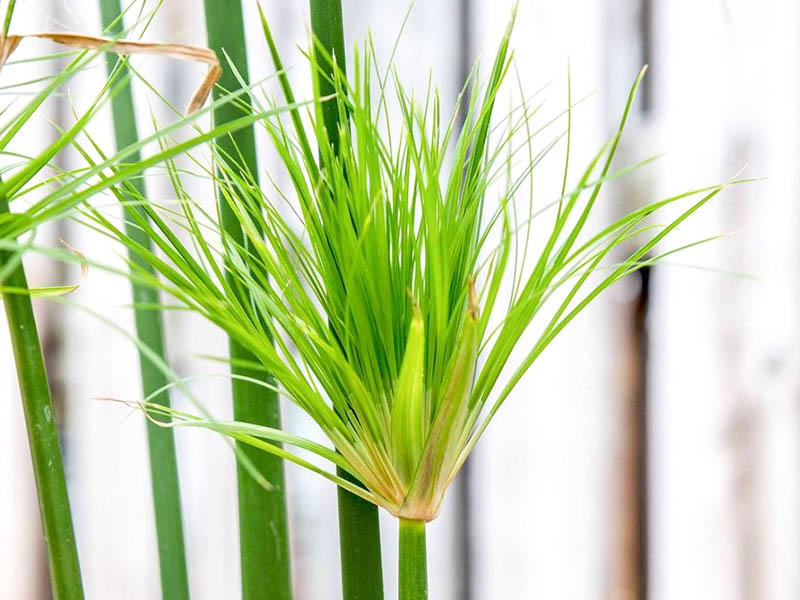
Growth Characteristics Papyrus (Cyperus papyrus 'King Tut'), also known as 'King Tut', is a wetland-loving perennial plant characterized by its tall stature and umbrella-shaped leaves. This plant prefers sunny and humid environments and thrives near water. Generally, it is highly adaptable to its environment and grows quickly. Propagation Methods Papyrus is primarily propagated by division. This method is most effective in spring or early summer. Simply divide the roots and plant each section individually. Propagation by seed is also possible, but it requires more time and care. Cultivation Methods - Sunlight: Choose a location with plenty of sunlight. It can grow in partial shade, but growth may be slowed. - Soil: Soil that retains moisture well is preferred. It grows even better when cultivated near water or ponds. - Watering: Water thoroughly, and maintaining moisture is particularly important during the early stages of cultivation. - Temperature: It prefers warm temperatures but can tolerate light frost. During the winter, it is necessary to bring it indoors or provide protection. Uses in the GardenPapyrus 'King Tut' is widely used as an ornamental plant around ponds or in waterside gardens. Its tall stature and unique shape provide a visual focal point in the garden. It is particularly effective in landscapes with ample water. Important Pests and Control MethodsPapyrus is a relatively pest-resistant plant, but root rot can occur due to excessive moisture. To prevent this, proper drainage must be maintained. Although rare, aphids or mites may appear; to control them, you can use appropriate insecticides or consider using natural predators. An environmentally friendly method is to remove pests using soapy water.
Plant Family
Cyperaceae
Height
1.2~1.8m
Spread
90~120cm
Colors
green
Bloom Period
March to August
Water Needs
well
Exposure
Sunny
Freezing Resistance
-5°C
Papyrus 'Prince Tut'
Cyperus papyrus
'Prince Tut'
Involucratus Cyperus 'Baby Thut'
Cyperus involucratus
'Baby Tut'