English
한국어
English
Español
中文
हिंदी
Home
News
Community
Dictionary
English
한국어
English
Español
中文
हिंदी
View list
Dictilloriza Elata
Dactylorhiza elata
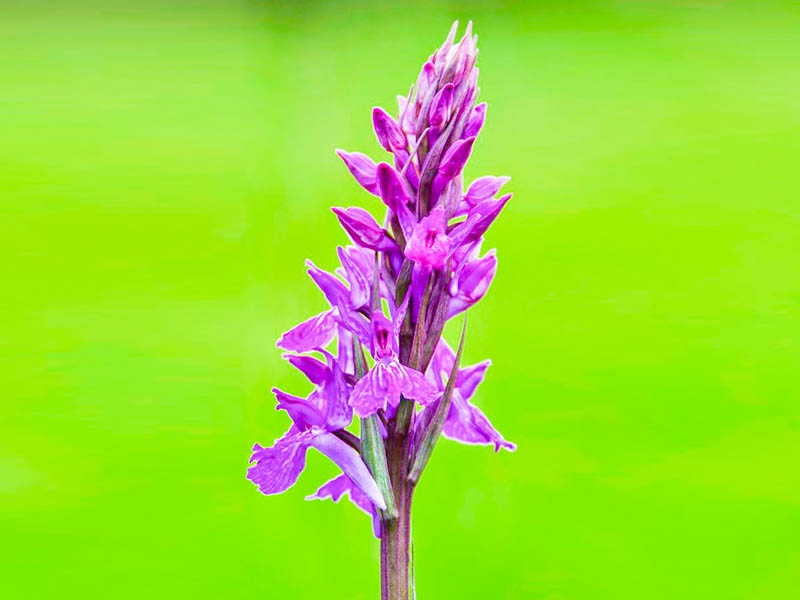
Growth Characteristics of Dactylorhiza elata Dactylorhiza elata is a perennial plant belonging to the Orchidaceae family and primarily grows in moist, well-drained soil. This plant tolerates conditions ranging from full sun to partial shade and typically grows to a height of 60 to 100 cm. This orchid blooms beautifully in the summer, displaying various colors such as pink, purple, and white. Propagation Methods Dactylorhiza elata is primarily propagated by two methods. First, it can be propagated by seeds; ripe seeds can be collected in the autumn and planted immediately or in the spring. Second, it can be propagated by dividing roots or bulbs. This method is mainly performed during the plant's dormancy period and is relatively easy to propagate. Cultivation Methods - Soil Preparation: It requires moist and well-drained soil. Generally, it thrives in slightly acidic to neutral soil. 2. Planting: Planting in autumn or spring is recommended. The appropriate soil depth is about 2 to 3 times the depth of the roots. - Watering: As this plant requires a lot of water, be careful to keep the soil from drying out. - Fertilization: Apply an appropriate amount of fertilizer during the spring and summer. Organic fertilizers or fertilizers specifically designed for orchids can be used. Uses in the Garden Dictiloriza elata is primarily used as an ornamental plant in gardens or flowerbeds due to its beautiful flowers. It tolerates shade or partial shade well, making it suitable for forest gardens or waterside gardens. Additionally, placing it alongside other wetland plants can create a natural landscape. Important Pests and Diseases & Control Methods - Diseases: Dictiloriza elata can be susceptible to fungal diseases. To prevent this, create a well-ventilated environment and cultivate it in well-drained soil. - Pests: It may be damaged by aphids or insects. In this case, control can be achieved using soapy water or organic insecticides. - Prevention: Conduct regular observation and early control to prevent pests and diseases. Based on this information, you will be able to grow healthy Dictyloriza elata. When it comes to plant care, it is always important to take measures considering the local climate and environment.
Plant Family
Orchid family
Height
60~90cm
Spread
15~60cm
Colors
purple
Bloom Period
May~June
Water Needs
commonly
Exposure
semi-shaded area
Freezing Resistance
-10°C
Dictilloriza Polisa
Dactylorhiza foliosa
Dahlia
Dahlia pinnata