English
한국어
English
Español
中文
हिंदी
Home
News
Community
Dictionary
English
한국어
English
Español
中文
हिंदी
View list
Dianthus
Dianthus longicalyx
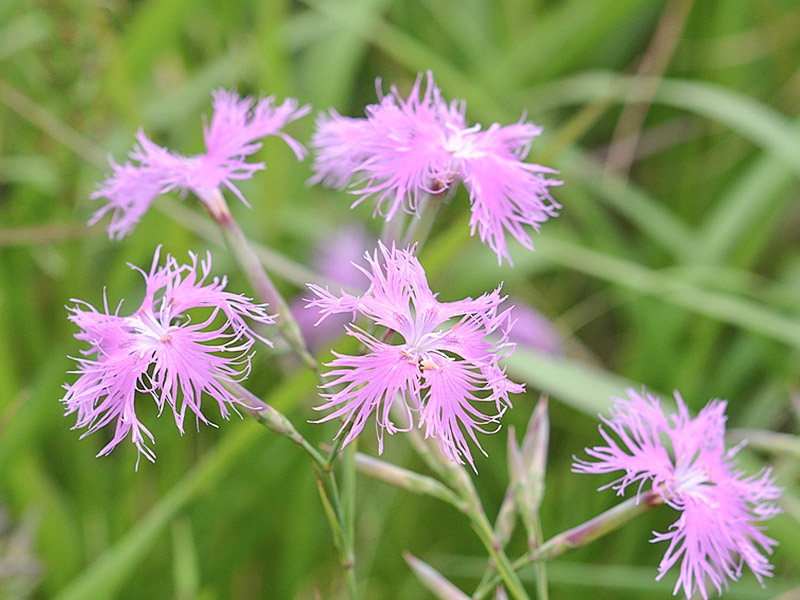
Growth Characteristics of Dianthus longicalyx Dianthus longicalyx is a perennial herbaceous plant that primarily grows in dry, well-drained soil in mountainous areas. It grows to a height of approximately 30 to 50 cm and features slender, long, green stems. The flowers are usually pink or red and bloom from summer to autumn. It thrives in sunny locations. Propagation Methods Dianthus longicalyx can be propagated by seeds and division. Spring is the optimal time for sowing seeds, while division should be performed in spring or autumn when plant growth is vigorous. For division, carefully separate the entire root system and plant it in a new location. Cultivation Methods - Soil Preparation: Select well-drained soil and add organic fertilizer before transplanting. - Location Selection: Choose a location with ample sunlight. - Planting: Plant at appropriate intervals to provide sufficient space for plant growth. 4. Watering: Since it prefers a dry environment, avoid overwatering. It is appropriate to water when the surface of the soil has dried out. - Fertilization: Apply an appropriate fertilizer once a year in the spring. Uses in the Garden Dianthus is well-suited for flower beds, borders, and rock gardens, and blends harmoniously with other plants. In particular, due to its low growth habit, it is also excellent for use as a ground cover. As a perennial plant, it is relatively easy to maintain, making it popular among gardeners. Important Pests and Control Methods Although Dianthus is a relatively hardy plant, you should be aware of the following pests and diseases: - Fungal Diseases: These can occur due to high humidity; to prevent them, maintain proper spacing and ensure good drainage. If an outbreak occurs, use an appropriate fungicide. - Aphids: Aphids may appear on the leaves; to prevent this, inspect the plants periodically and use insecticides if necessary. 3. Weed Management: As an increase in weeds can lead to a rise in pest and disease outbreaks, periodic weed removal is necessary. With proper care, the Dianthus can grow beautifully and healthily in the garden.
Plant Family
Caryophyllaceae
Height
30~100cm
Colors
pink
Bloom Period
June to August
Water Needs
commonly
Exposure
Sunny
Freezing Resistance
-10°C
Pink
Dianthus superbus
Sea pink
Dianthus japonicus