English
한국어
English
Español
中文
हिंदी
Home
News
Community
Dictionary
English
한국어
English
Español
中文
हिंदी
View list
Didymaotus rapidiformis
Didymaotus lapidiformis
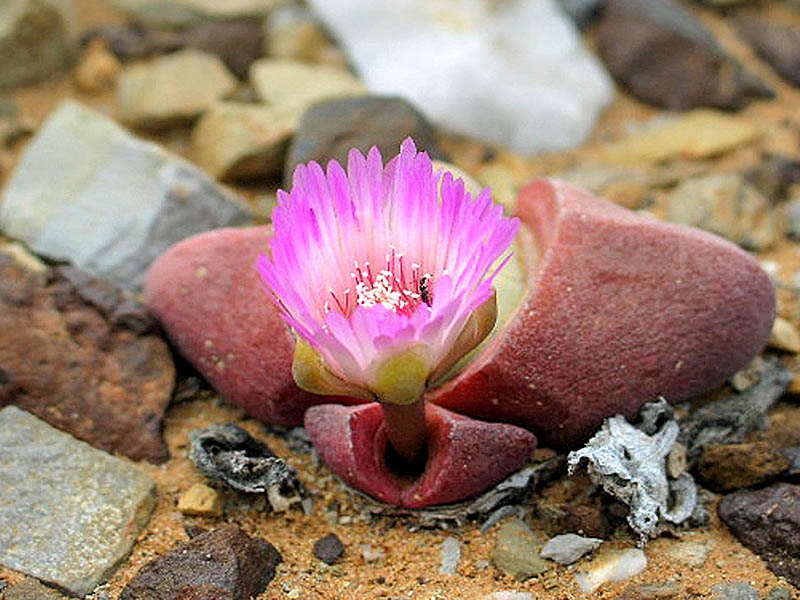
Didymaotus lapidiformis is a type of succulent native to South Africa. The following is information regarding the various characteristics of this plant. Growth Characteristics: Didymaotus lapidiformis adapts well to dry environments and is characterized by its small stature and thick leaves. This plant requires plenty of sunlight and thrives in well-drained soil. Its growth rate is relatively slow. Propagation Methods: This plant is primarily propagated by seeds. Since the germination rate of seeds is not high, it is recommended to sow a sufficient quantity. It can also be propagated via leaf cuttings. If you cut off a leaf, dry it, and plant it in well-drained soil, it will take root. Cultivation Methods: When cultivating Didymaotus lapidiformis, place it in a sunny location and water moderately when the surface soil dries out. It is recommended to use soil specifically designed for succulents or well-draining soil. During winter, watering should be reduced to keep the environment dry. Uses in the Garden: This plant is used as an ornamental plant in gardens decorated with stones or gravel, or in succulent gardens. Its small, uniquely shaped leaves make it suitable for adding a focal point to the garden. Important Pests and Control Methods: While Didymaotus rapidiformis is generally resistant to pests and diseases, root rot can occur due to overwatering. To prevent this, it is important to use well-draining soil and regulate watering. Additionally, aphids or scale insects may appear, so it is recommended to detect and remove them early or use appropriate pesticides. Please refer to the information above to grow your Didymaotus rapidiformis healthily.
Plant Family
Pomegranate family
Height
15cm
Colors
white, pink
Bloom Period
September
Water Needs
Bad
Exposure
Sunny
Freezing Resistance
-10°C
Didierea madagascariensis
Dieffenbachia 'Wilson's Delight'
Dieffenbachia seguine
'Wilson’s Delight'