English
한국어
English
Español
中文
हिंदी
Home
News
Community
Dictionary
English
한국어
English
Español
中文
हिंदी
View list
Large Baengnyeong plant
Diodia virgiana
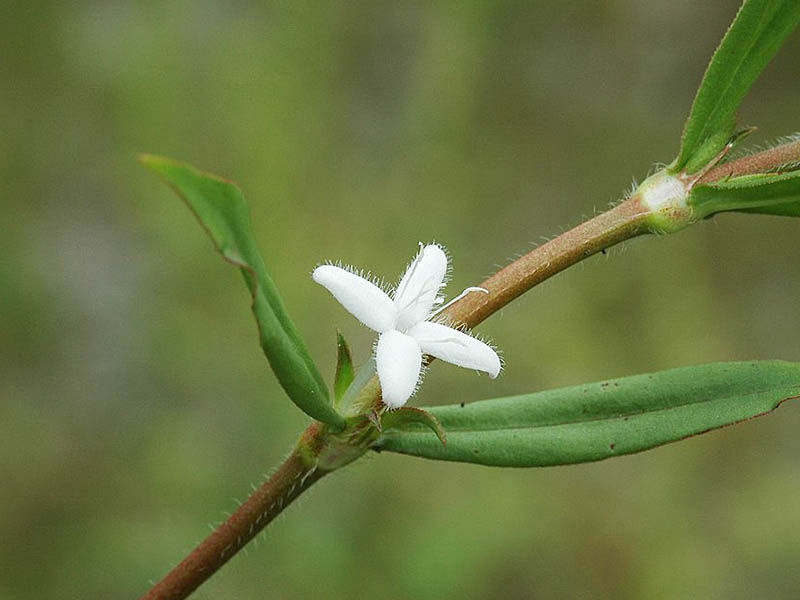
Diodia virgiana is a plant native to North America that grows as a herbaceous perennial. Growth Characteristics- Growth Environment: It thrives in sunny locations and prefers well-drained soil. It is particularly tolerant of moisture and is resistant to various climatic conditions. - Growth Form: It grows to a low stature and covers the ground, making it suitable for use as a ground cover plant. - Leaves and Flowers: The leaves are ovate or elliptical, and it produces small white or pale pink flowers during the summer. Propagation Methods- Seeds: It can be propagated by seeds. It is recommended to collect seeds in the autumn and sow them in the spring. - Cuttings: Propagation by cuttings is not commonly used because the plant does not root well. Cultivation Methods- Soil Preparation: It should be planted in well-drained soil, and compost can be added if necessary to improve soil quality. - Watering: It prefers a slightly humid environment rather than a dry one. Therefore, it is important to water when the soil is moderately dry. - Fertilization: Apply an appropriate amount of general horticultural fertilizer in spring and autumn. Uses in the Garden- Ground Cover: Due to its low and wide spreading growth, it is widely used as ground cover. - Border Decoration: Suitable for decorating the edges or borders of a garden. Important Pests and Control Methods- Diseases: It is generally resistant to diseases, but root rot may occur if the soil becomes excessively wet. Prevent this by ensuring thorough drainage. - Pests: Leaf-eating pests may occur; in such cases, control can be achieved using appropriate crop protection agents. The information above will be helpful for the overall care of Gymnocalycium chinense. When planting in a garden, it is important to adjust management according to the climate and environment of the specific region.
Plant Family
Rubiaceae
Height
10~60cm
Colors
white
Bloom Period
June to September
Water Needs
commonly
Exposure
Sunny
Freezing Resistance
-15°C
Dinterantus Wilmotianus
Dinteranthus wilmotianus
Baengnyeongpul
Diodia teres