English
한국어
English
Español
中文
हिंदी
Home
News
Community
Dictionary
English
한국어
English
Español
中文
हिंदी
View list
Echinacea 'Summer Cherry'
Echinacea purpurea
'Summer Cherry'
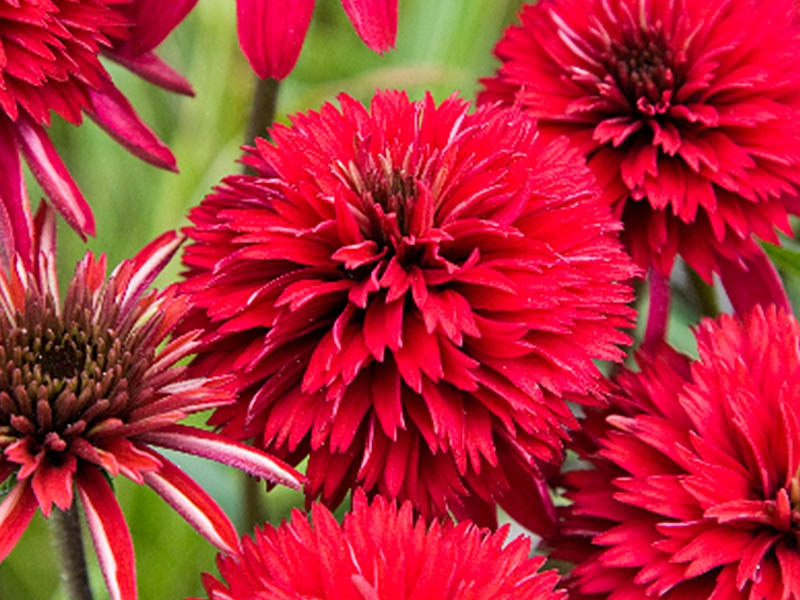
The growth characteristics, propagation methods, cultivation methods, garden uses, and major pests and diseases and control methods of Echinacea 'Summer Cherry' are explained below. Growth Characteristics Echinacea 'Summer Cherry' is a perennial herbaceous plant belonging to the Asteraceae family that blooms with red cherry-colored flowers from summer to autumn. It grows to a height of approximately 60 to 90 cm and grows in an upright form. This plant thrives best in well-drained soil and sunny locations, and because it is relatively resistant to cold, it can be cultivated in most regions of Korea. Propagation Methods Echinacea can be propagated by seeds or division. Seeds can be sown outdoors or indoors in the spring, and germination takes about 10 to 14 days. Division is performed in spring or autumn by separating mature plants and providing them with new spaces. Cultivation Methods It is important to plant Echinacea 'Summer Cherry' in a sunny location and use well-drained soil. Spacing plants approximately 30 to 45 cm apart ensures adequate aeration. It does not need to be watered too frequently and tolerates dry environments well. Mulching in the spring can help maintain soil moisture and suppress weed growth. If necessary, remove withered flowers after blooming to promote the production of new flowers. Uses in the GardenWith its vibrant flowers, this plant offers excellent decorative appeal and is suitable for serving as the centerpiece of a garden. It can be used as a background plant or intermediate planting in flowerbeds, and its ability to attract bees and butterflies makes it advantageous for creating ecological gardens. It can also be used as a cut flower. Important Pests and Control Methods Echinacea is relatively resistant to pests and diseases, but it can occasionally contract them. The most common issues are root rot, leaf blight, and fungal diseases. To prevent these pests and diseases, it is important to maintain proper drainage and aeration and avoid excessive moisture. If a disease occurs, remove the infected parts and apply an appropriate fungicide. Aphids are a major insect pest issue, and to eliminate them, you can consider using soapy water sprays or natural control methods utilizing natural enemies.
Plant Family
Asteraceae
Height
70cm
Spread
50cm
Colors
red
Bloom Period
June to August
Water Needs
commonly
Exposure
Sunny
Freezing Resistance
-30°C
Echinacea 'Sweet Sixteen'
Echinacea purpurea
'Sweet Sixteen'
Purple Indigo 'White Double Delight'
Echinacea purpurea
'White Double Delight'