English
한국어
English
Español
中文
हिंदी
Home
News
Community
Dictionary
English
한국어
English
Español
中文
हिंदी
View list
Purple Thousand-Star Kingdom 'Rubinston'
Echinacea purpurea
'Rubinstern'
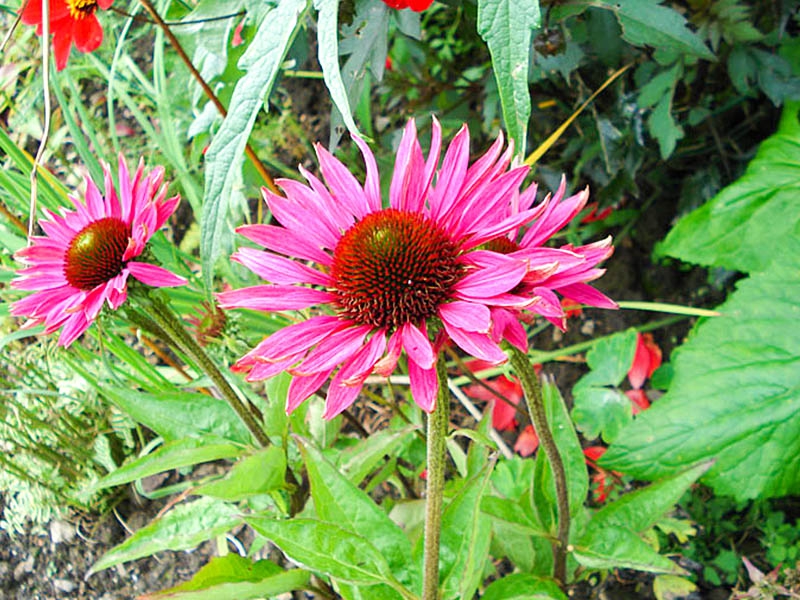
Echinacea purpurea 'Rubinstern' is a perennial plant that offers outstanding aesthetic appeal and beneficial ecological advantages. The following is information regarding this plant's growth characteristics, propagation methods, cultivation techniques, garden uses, and major pests and control methods. Growth Characteristics - Size and Form: Mature plants grow to a height of approximately 90–120 cm. The stems are straight and upright, and it blooms with purple flowers from summer to autumn. - Environmental Conditions: It prefers locations with plenty of sunlight and well-drained soil. While it grows well in various soils, neutral to slightly acidic soil is suitable. - Cold Hardiness: It is resistant to cold and can withstand winter well under proper care. Propagation Methods - Seed Propagation: Echinacea purpurea can be propagated by seeds. Seeds can be sown directly in spring or autumn, or germinated indoors and then transplanted. - Division Propagation: Mature plants can also be propagated by dividing their roots. It is usually divided once every 3 to 4 years, in spring or early autumn. Cultivation Method - Planting: Plant during a cool period when the daily temperature range is not large. When planting seeds, maintain appropriate spacing and ensure sufficient drainage in the soil. - Watering: Water consistently during the initial stage to help the plant establish itself, but avoid overwatering thereafter. - Fertilizing: Generally, special fertilizers are not necessary, but provide an appropriate amount of organic fertilizer in the spring to improve plant health and flower quality. - Weed Management: Keep the surrounding area tidy to prevent weeds from growing, and take care to avoid damaging the roots. Uses in the Garden Purple coneflowers serve as an accent to focus on gardens or landscapes. The colorful purple flowers are attractive to bees and butterflies, enhancing their ecological value. They can be combined with other multi-colored flowers to create various garden styles. Important Pests and Control Methods - Pests and Diseases: While purple coneflowers are generally resistant to pests and diseases, they can sometimes be susceptible to leaf blight or fungal diseases. - Control Methods: - Prevention: Spacing plants sufficiently apart improves air circulation, and adjusting watering schedules minimizes the time leaves remain wet. - Pest Management: Use general horticultural insecticides when necessary, and utilize natural predators for eco-friendly control. Based on this information, grow your purple coneflower 'Rubinston' healthily and cultivate a more beautiful and ecologically beneficial garden.
Plant Family
Asteraceae
Height
60~90cm
Spread
60~90cm
Colors
pink
Bloom Period
June to August
Water Needs
commonly
Exposure
Sunny
Freezing Resistance
-30°C
Purple Indigo 'Strawberry and Cream'
Echinacea purpurea
'Strawberry and Cream'
Purple Thousand Kingdoms 'Red Baron'
Echinacea purpurea
'Red Baron'