English
한국어
English
Español
中文
हिंदी
Home
News
Community
Dictionary
English
한국어
English
Español
中文
हिंदी
View list
Daphne
Edgeworthia chrysantha
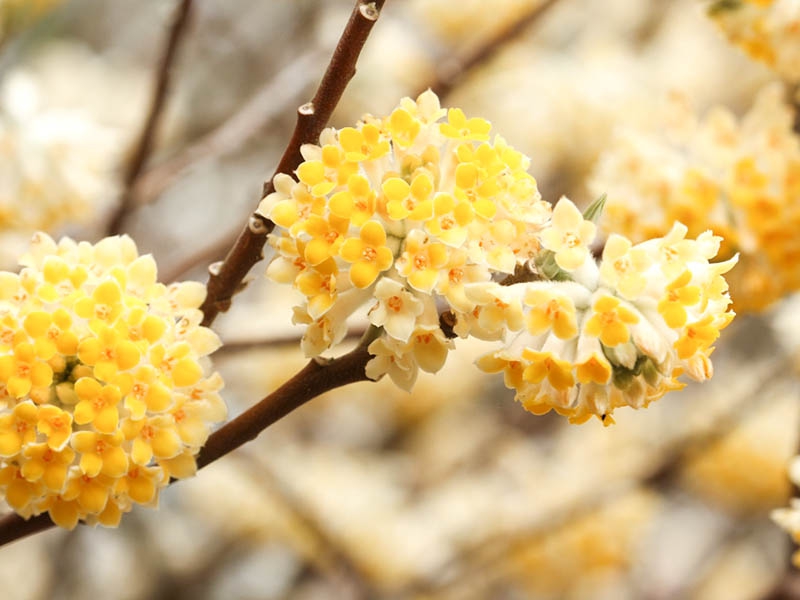
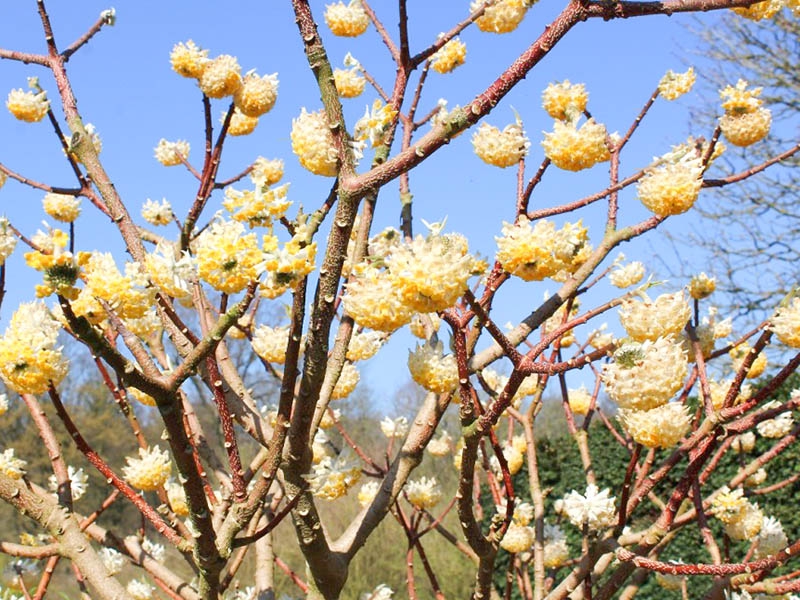
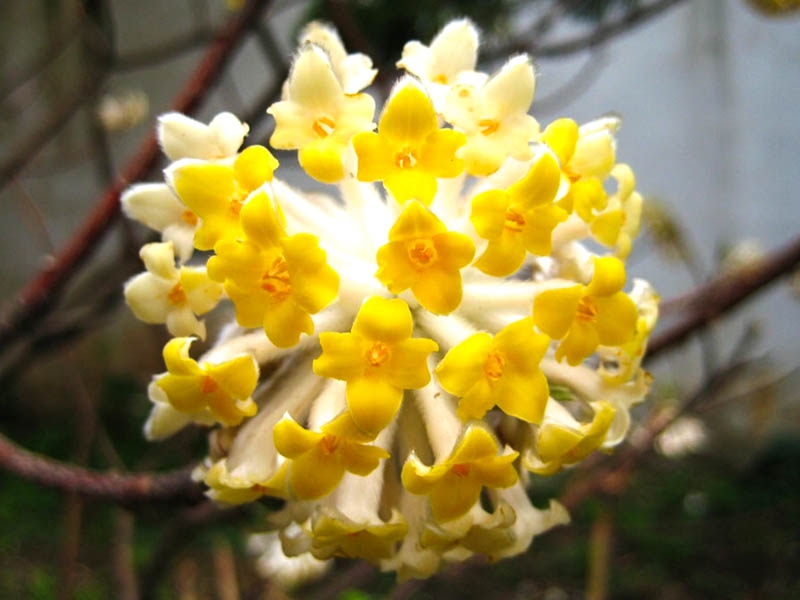
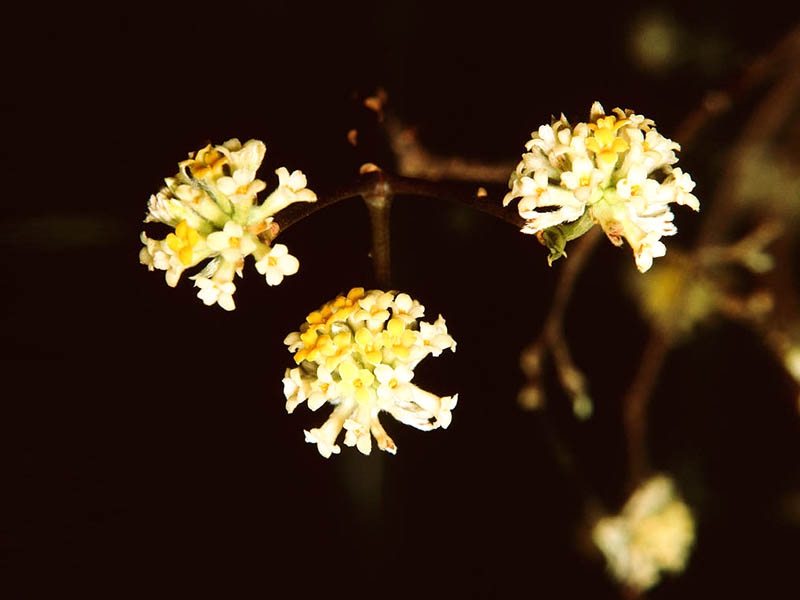
Edgeworthia chrysantha is a deciduous shrub that grows primarily in Korea, China, and Japan, characterized by its winter flowering. Growth Characteristics - Flowers: Edgeworthia blooms with yellow flowers from winter to early spring. The flowers have a strong fragrance, and because their flowering period differs from that of typical trees, they add a unique charm to winter gardens. - Leaves: The leaves are oval-shaped; they grow well in the summer, turn green in the autumn, and fall off. - Growing Environment: It thrives in sunny locations and prefers well-drained soil. However, it can grow in some shade, although the amount of flowering may be reduced. Propagation Methods - Cuttings: Cut branches in a semi-hardwood state during the summer and propagate them as cuttings. Each cutting should be cut to an appropriate size, and it is recommended to trim the leaves by about half. - Seeds: It can be propagated by sowing seeds in the spring, although it may take some time for them to germinate. Cultivation Method - Soil: Well-drained soil is suitable, and it can be grown in both full sun and partial shade. - Watering: Water thoroughly during dry seasons or intense summer heat. However, caution is required as excessive moisture can cause root rot. - Fertilizer: It is best to apply fertilizer in moderation during spring and summer. Slow-release fertilizers are recommended. Garden Uses The Daphne odora is highly valued as an ornamental plant, as its winter-blooming flowers can serve as a focal point in the garden. Additionally, its strong fragrance makes it highly useful in scented gardens. Major Pests and Diseases & Control Methods - Diseases: Gray mold may occur. To prevent this, it is important to ensure good ventilation and avoid excessive moisture. If the disease occurs, remove diseased branches immediately and control it using registered fungicides. - Pests: Aphids and scale insects may occur. Upon early detection, they can be removed by washing them off with water or using soapy water; in severe cases, use an appropriate insecticide. Through this, you can keep the Daphne plant healthy and beautiful.
Plant Family
Thymelaeaceae
Height
1.2~1.8m
Spread
120~180cm
Colors
white, yellow
Bloom Period
March
Water Needs
commonly
Exposure
Sunny
Freezing Resistance
-10°C
Daphne 'Red Dragon'
Edgeworthia chrysantha
'Red Dragon'
Edith Korea Grandis
Edithcolea grandis