English
한국어
English
Español
中文
हिंदी
Home
News
Community
Dictionary
English
한국어
English
Español
中文
हिंदी
View list
Acanthopanax senticosus
Eleutherococcus senticosus
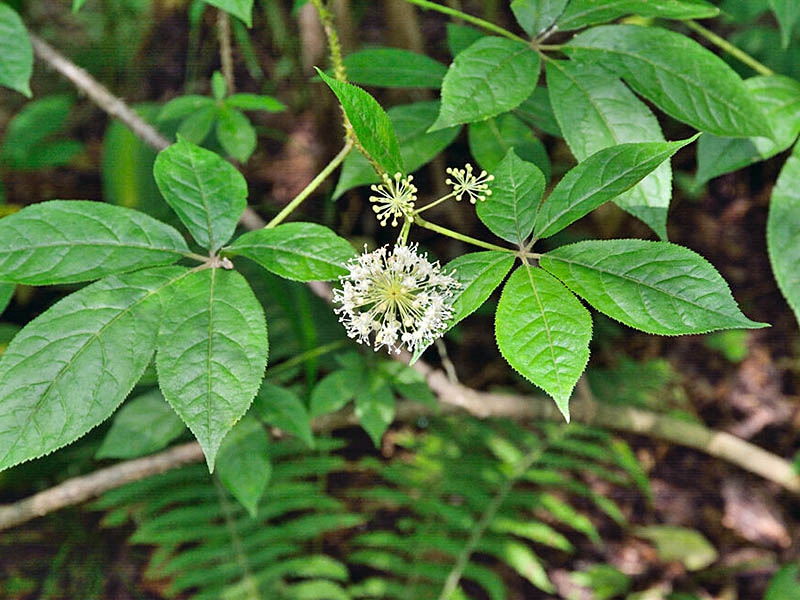
Acanthopanax senticosus, scientifically known as Eleutherococcus senticosus, is a relatively cold-tolerant plant that thrives primarily in cool climates. While it grows well in shade, it does require some sunlight. It prefers well-drained soil, and it is beneficial to slightly adjust the soil's acidity. Growth Characteristics Acanthopanax senticosus is a perennial plant with deep roots that grow to a height of approximately 2 to 3 meters. Its leaves are palmately compound; they become thicker and glossy from summer to autumn. Flowers typically bloom in the summer, appearing in clusters of small yellow blossoms. Propagation Methods Propagation is primarily carried out by seeds and cuttings. Seeds are harvested in the autumn, stored, and sown in early spring. Cuttings are taken in the summer, using healthy branches about 10 cm in length. Maintaining appropriate humidity after planting is important. Cultivation Methods Since Acanthopanax sessiliflorus thrives in well-drained soil, it is important to prepare the soil properly before planting. Water should be applied moderately, avoiding excessive amounts, and sufficient water supply is particularly necessary during the early stages of growth. Applying fertilizer during the growing season can promote growth. Uses in Gardens This tree is popular for landscaping and creates a natural atmosphere when planted in gardens or parks. The tree's distinctive decorative leaves and flowers harmonize well with the surrounding environment, creating a stunning backdrop. Important Pests and Diseases and Control Methods Although Acanthopanax sessiliflorus is relatively resistant to pests and diseases, attention should be paid to certain insects and minor ailments. Symptoms such as leaf spots or curling may appear, which are primarily caused by pests such as aphids. These pests can be removed by washing with soapy water or controlled using appropriate pesticides. If disease is suspected, inspecting the soil and replacing it if necessary is also an effective approach. With effective management, you can grow healthy Acanthopanax sessiliflorus and maintain a beautiful landscape in your garden for a long time.
Plant Family
Araliaceae
Height
2∼3m
Colors
yellow
Bloom Period
July~August
Water Needs
commonly
Exposure
semi-shaded area
Freezing Resistance
-40°C
Acanthopanax
Eleutherococcus sessiliflorus
hairy Acanthopanax
Eleutherococcus divaricatus