Gyeongbuk Agricultural Research & Extension Services Develops New Climate Change Adaptation Variety of Floriculture
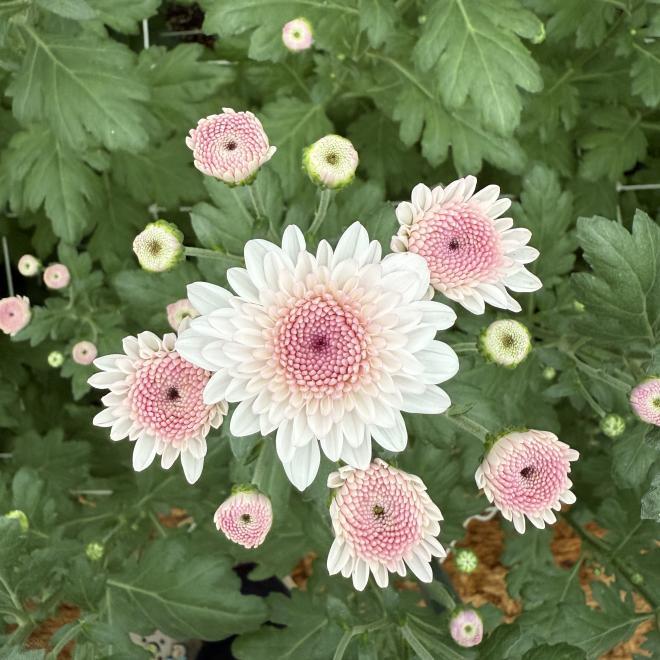
The Gyeongsangbuk-do Agricultural Research and Extension Services has developed five new flower varieties that exhibit stable growth and superior quality during both high and low temperature periods, and is applying for plant variety protection with the National Seed Center.
Due to recent climate change, flower discoloration and pest infestations increase during high temperatures, while heating costs become a significant burden during low temperatures. Consequently, declining quality and rising production costs are emerging as major challenges for farmers.
※ The total flower cultivation area nationwide is 4,171 ha, of which cut flowers account for 1,189 ha (290 ha for chrysanthemums and 223 ha for roses).
In response, the Gumi Smart Agriculture Research Institute has developed gerbera and chrysanthemum varieties that exhibit minimal color change and stable blooming even during high temperatures, as well as rose varieties with excellent growth during low temperatures.
The newly developed varieties include the gerbera 'Pinksh Spy,' which exhibits excellent growth during high temperatures; three spray chrysanthemum varieties—'Pinkring ND,' 'Crystal ND,' and 'Sweetie ND'—as well as the standard rose 'Pink Swan,' which offers excellent growth during low temperatures and enables reduced heating costs.
The gerbera 'Pinksh Spy' features light pink, spider-shaped flowers; it is characterized by vigorous growth and a high annual yield of 124 flowers per plant.
The chrysanthemums 'Pinkring ND' and 'Crystal ND' are single-flowered pink varieties; both have a short flowering period of approximately six weeks and are easy to cultivate due to their thick, sturdy stems. ‘Sweety ND’ is a light pink double-flowered variety with 241 petals, featuring a lush appearance and minimal color fading even during high temperatures. The standard rose ‘Pink Swan’ is a deep pink variety that maintains a long cut flower length even in low temperatures. It features numerous petals and is almost thornless, offering excellent ease of handling.
Jo Young-sook, Director of the Gyeongsangbuk-do Agricultural Research and Extension Services, stated, “The newly bred varieties were developed to respond to climate change while being suitable for the domestic cultivation environment. They are expected to significantly contribute to improving the productivity of the Gyeongbuk floriculture industry and increasing farm income.” She added, “We will continue to strengthen the competitiveness of the domestic floriculture industry by developing superior varieties that reflect consumer preferences and are adapted to climate change.”