Kew and Bogotá researchers formally describe new giant waterlily Victoria colombiana from Colombia’s Orinoco basin
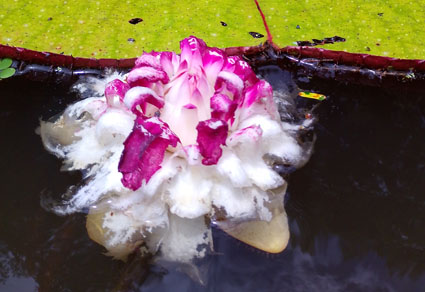
The central finding is that a giant waterlily confirmed in the upper Orinoco drainage linked to the Inírida area of Colombia’s Guainía department has been formally described as a new species, Victoria colombiana. The paper was published on 7 October 2026 in Phytotaxa, volume 778, issue 2, and Kew announced the results in a press release on 9 October.
According to Kew, the investigation began after Carlos Magdalena, Botanical and Scientific Research Horticulturist at Kew, saw photographs from the Inírida region on Instagram about five years earlier and questioned the identification. The team then combined satellite imagery, local knowledge and fieldwork to build evidence that plants of the genus Victoria were present in the area.
Fieldwork involved Mauricio Bernal of the Jardín Botánico de Bogotá José Celestino Mutis and members of Indigenous reserves. Kew’s release said the knowledge of local participants including Nilo Rodríguez, Jaime Hernández and Gustavo Melo played an important role in organising the expedition and locating the plants.
The researchers said that during a five-day expedition they initially found only two non-flowering individuals, but shortly before returning they travelled at night and located a second population in a small lake. Five additional plants were recorded there, including one in flower, allowing the team to secure the botanical material needed for the species description.
The Phytotaxa abstract states that mapping Victoria populations across South American river drainages and comparing morphology supported recognition not only of Victoria colombiana but also Victoria mattogrossensis from the Pantanal region. The paper says five species of Victoria are now accepted and that they differ in morphology and distribution.
For conservation, the team estimates that 30 to 50 Victoria colombiana plants remain in the wild and says work is under way toward an official IUCN Red List assessment. Kew said long-term conservation discussions include cultivation research in Bogotá, continued seed collection and the possibility of establishing a naturalised population in a more accessible lake within Indigenous territory.
출처